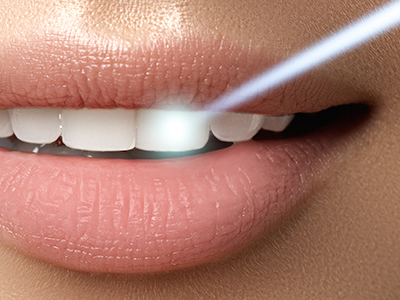
Laser dentistry uses focused light energy to perform a variety of dental procedures with a level of precision that traditional tools cannot always match. Instead of relying exclusively on mechanical instruments, dental lasers target tissues with concentrated wavelengths that interact with water, pigment, or other tissue components. This interaction allows clinicians to remove or reshape tissue, disinfect surfaces, and stimulate healing in controlled ways.
Different types of dental lasers are designed for soft-tissue work (gums and mucosa) or hard-tissue applications (enamel and dentin). The devices vary in wavelength, power, and delivery systems, and those differences determine how the laser affects tissue. Practitioners choose the appropriate laser type and settings based on the procedural goal, tissue composition, and the patient’s individual needs.
While the concept might sound futuristic, lasers have been integrated into mainstream dentistry for decades. Their effectiveness depends on both the technology and the clinician’s expertise: proper training, sensible clinical protocols, and careful case selection are essential to get the intended benefits while maintaining safety.
Lasers are versatile and can be used in a range of procedures. In soft-tissue dentistry they’re commonly used for gum contouring, frenectomies, removal of small lesions, and to reduce bacteria in periodontal pockets. Because the laser can cauterize as it cuts, bleeding is often minimal, which can be particularly helpful for patients with bleeding tendencies or those who prefer a less invasive approach.
For hard-tissue applications, certain lasers can selectively remove decayed tooth structure with less impact on the surrounding healthy enamel and dentin. Lasers are also used to cure or harden restorative materials, and they can activate in-office whitening agents to improve the speed and uniformity of tooth whitening procedures. In some biopsy and lesion-management scenarios, lasers allow for precise excision with reduced post-procedure discomfort.
Lasers can also play a role in implant maintenance, treatment of cold sores and aphthous ulcers, and in adjunctive therapies that enhance healing. Their disinfecting properties—when used properly—can reduce bacterial load on treated surfaces, complementing mechanical cleaning and traditional treatment approaches.
One of the most noticeable differences patients report is increased comfort. Because many laser procedures do not require direct contact, vibration, or high-speed cutting, the sensations associated with drilling are often absent. The reduced need for anesthesia is a potential advantage in select cases, and recovery is frequently quicker with less swelling or bleeding compared with more invasive alternatives.
Safety is a top priority when using lasers clinically. Modern dental lasers include safeguards such as calibrated power settings, pulse controls, and shielding to protect both patient and team. Clinicians also employ protective eyewear and follow established safety protocols to prevent accidental exposure. When used within their intended indications, lasers are a safe adjunct to conventional dental methods.
That said, the overall patient experience depends on proper case selection and communication. A thorough exam and discussion about expectations help patients understand what to expect before, during, and after treatment. When lasers are combined with gentle technique and clear post-operative instructions, many patients find the experience less stressful than traditional approaches.
Before any laser treatment begins, your provider will review your medical and dental history and explain the goals of the procedure. The clinician will select the appropriate laser and settings for the tissue type and clinical objective, then prepare the operatory with safety measures in place. Protective eyewear is standard for everyone in the room during activation.
During the procedure, you may notice a warm sensation, a mild tapping, or little to no sensation at all depending on the area and the laser used. Many soft-tissue procedures include brief treatments with immediate visual results, while hard-tissue work may involve short, controlled pulses to remove decay or prepare a surface for bonding. Throughout, the clinician monitors tissue response and adjusts settings as needed for comfort and effectiveness.
After treatment patients often experience minimal downtime. Instructions typically focus on gentle oral hygiene, avoiding certain foods temporarily, and observing the treated area for signs of normal healing. If any discomfort occurs, simple over-the-counter pain relievers are usually sufficient; prolonged or unusual symptoms should be reported so the team can evaluate them promptly.
Lasers are powerful tools but they are not universal solutions. There are clinical situations where traditional instruments or techniques remain the best choice—for example, complex restorative work, extensive surgical procedures, or areas where laser physics do not provide an advantage. Understanding those limits helps set realistic expectations and ensures the most predictable outcomes.
Equally important is the clinician’s training and experience. Laser dentistry requires specific education in device operation, tissue interactions, safety protocols, and maintenance. Providers who invest in continuing education and integrate lasers thoughtfully into their practice are better positioned to use them effectively and safely.
When evaluating options, look for a dental team that can clearly explain why a laser is being recommended and how it fits into an overall treatment plan. In our practice, laser technology is part of a broader commitment to conservative, minimally invasive care—used selectively to enhance comfort, precision, and healing when clinically appropriate.
Laser dentistry offers precise, often gentler alternatives for many soft- and hard-tissue procedures, with benefits that include reduced bleeding, improved patient comfort, and faster recovery in appropriate cases. Success depends on choosing the right laser for the task and pairing it with a clinician who understands both the technology and the clinical context.
If you’d like to learn whether laser dentistry is a good fit for your particular dental needs, please contact us for more information. Our team is happy to explain how this technology may be used as part of a personalized treatment plan and answer any questions you have about the process.


Laser dentistry uses focused light energy to cut, reshape, disinfect, or stimulate tissue in the mouth with precision that differs from traditional mechanical instruments. Different lasers interact with water, pigment, and mineral content in tissues to produce controlled effects on soft or hard structures. When applied appropriately, lasers can reduce bleeding, lower bacterial load, and limit collateral damage to adjacent tissues.
Although the technology may sound new, lasers have been part of dental practice for decades and are used as adjuncts to conventional care. Their effectiveness depends on selecting the right laser type and parameters for the specific clinical goal. A well-trained clinician integrates lasers into a broader treatment plan rather than relying on them exclusively.
Dental lasers deliver concentrated light at specific wavelengths that are absorbed differently by soft tissue, hard tissue, or pigments. Common types include diode lasers for soft-tissue procedures, erbium lasers that can work on enamel and dentin, and CO2 lasers useful for precise soft-tissue cutting and coagulation. The choice of wavelength, power, and delivery mode determines how the laser interacts with the target and the surrounding structures.
Modern dental lasers also offer adjustable pulse settings and calibrated power controls to tailor treatment to each patient and procedure. Safety features such as shielding and pulse modulation further reduce the risk of unintended thermal effects. Clinicians must be trained to match laser physics to clinical objectives for predictable outcomes.
Lasers are versatile and commonly used for soft-tissue tasks like gum contouring, frenectomies, removal of small benign lesions, and reducing bacteria in periodontal pockets. For hard-tissue applications some lasers can selectively remove decayed tooth structure, assist with bonding surface preparation, and activate whitening agents during in-office bleaching. Lasers are also used for biopsy excision, treatment of aphthous ulcers and cold sores, and as adjuncts in implant maintenance.
While lasers expand the options available to clinicians, they complement rather than completely replace traditional instruments in many cases. The best use of laser therapy is determined by the tissue involved, the clinical objective, and the patient’s overall oral health. Your provider will recommend lasers only when they add a clear clinical benefit.
Many patients report greater comfort with laser procedures because lasers often reduce the need for mechanical vibration and can minimize bleeding and swelling. In select cases less or no local anesthesia is required, and recovery tends to be quicker with reduced postoperative discomfort. Perceived comfort varies with the procedure type, the laser used, and individual patient sensitivity.
It is important to set realistic expectations since not every case is completely painless and some procedures still require conventional techniques or anesthesia. Communication between the patient and clinician about sensations and anxiety helps tailor the approach. A thorough exam and clear explanation prior to treatment improve the overall experience.
Preparation for a laser appointment begins with a complete medical and dental history so the team can identify relevant conditions or medications that could affect treatment. Tell your provider about any medications, implants, or devices and about pregnancy or immune conditions so they can make informed decisions about laser use. If you have concerns about sensitivity or anxiety, discuss topical or local anesthesia options before the appointment.
On the day of the procedure follow any specific preoperative instructions provided by the office, such as fasting only when required for sedation. Protective eyewear and other safety measures will be provided in the operatory. Clear pre-procedure communication ensures safety and helps the clinician select the optimal laser settings for your needs.
Recovery after laser treatment is often faster and less uncomfortable than traditional surgical methods, with minimal bleeding and swelling in many cases. Typical recommendations include gentle oral hygiene around the treated area, avoiding very hot or spicy foods for a short period, and following any specific care instructions your clinician gives. Over-the-counter analgesics are usually sufficient for mild discomfort, but the team will advise you if stronger pain control is needed.
Healing timelines depend on the procedure and the tissues involved, and follow-up visits may be scheduled to monitor progress. Watch for signs of normal healing such as gradual reduction in swelling and return to normal function, and contact the office if you notice prolonged pain, heavy bleeding, or signs of infection. Prompt communication helps address concerns and supports predictable recovery.
Like any clinical tool, lasers have limitations and potential risks if not used correctly; these include the possibility of thermal damage, incomplete removal of diseased tissue, or ineffective results when lasers are used beyond their intended indications. Not all clinical situations are suitable for laser therapy, and some extensive restorative or surgical procedures still require conventional instruments. Understanding the limitations helps set realistic expectations and ensures patient safety.
Proper training and adherence to safety protocols are essential to minimize risks, including use of protective eyewear and calibrated settings specific to the tissue type. Discuss your full medical history and any implanted devices with the dental team so they can evaluate whether a laser is appropriate. Choosing a provider who explains why a laser is recommended and how it will be used is an important part of safe care.
Laser dentistry aligns closely with a conservative, minimally invasive philosophy by enabling selective tissue removal and reducing collateral trauma to healthy structures. In hard-tissue applications certain lasers can remove decayed enamel and dentin more precisely, preserving more of the natural tooth and supporting remineralization strategies. In soft-tissue work lasers can contour gingiva or remove small lesions without large incisions, which often means quicker healing and less postoperative discomfort.
At Angela Laithangbam, DDS Inc. lasers are used selectively as part of a broader plan to preserve tooth structure and support long-term oral health. The technology is one of several tools we employ to provide precise, patient-centered care that emphasizes preservation over replacement. Your clinician will recommend laser use only when it improves predictability or comfort for a given procedure.
In periodontal care lasers can be used to reduce bacteria in periodontal pockets, recontour inflamed tissue, and assist with healing after pocket debridement. Their ability to cauterize as they cut often reduces bleeding and may help clinicians visualize the surgical field more clearly. Lasers may also be used during follow-up maintenance to address localized areas of inflammation or to manage small lesions.
Lasers are typically an adjunct to mechanical cleaning and comprehensive periodontal therapy rather than a standalone cure for advanced periodontal disease. Regular periodontal maintenance, good oral hygiene, and timely professional care remain central to long-term gum health. Your dental team will explain how laser therapy fits into your individualized maintenance plan if it is indicated.
The best way to determine if laser dentistry is appropriate is to schedule an evaluation where your clinician reviews your medical and dental history, conducts an exam, and discusses your treatment goals. A careful assessment will identify whether a laser offers a clear clinical advantage for the specific tissues and condition involved. Expect the provider to explain alternatives, risks, and the rationale for recommending laser therapy when applicable.
At Angela Laithangbam, DDS Inc. we prioritize conservative, evidence-based choices and will recommend lasers only when they enhance precision, comfort, or healing. If you have questions about what to expect, ask the team for a step-by-step explanation of the proposed procedure and postoperative care. Informed decision-making between you and your clinician leads to safer and more predictable outcomes.
Ready to schedule your next dental appointment or have questions about our services?
Contacting Hearth Dental Practice is easy! Our friendly staff is available to assist you with scheduling appointments, answering inquiries about treatment options, and addressing any concerns you may have. Whether you prefer to give us a call, send us an email, or fill out our convenient online contact form, we're here to help. Don't wait to take the first step towards achieving the smile of your dreams – reach out to us today and discover the difference personalized dental care can make.